
 Carlos Palop
IMPALA Calls for Coordinated Action Against Streaming Fraud as AI Escalates Risk
IMPALA's executive chair Helen Smith used International Fraud Awareness Week to demand tougher, coordinated action against streaming manipulation. Her warning is blunt: the integrity of digital music markets is at stake. For independent songwriters, this is not abstract policy debate. Streaming fraud directly reduces the royalty pools you draw from and makes legitimate claims harder to recover.
The fraud problem is growing faster than detection
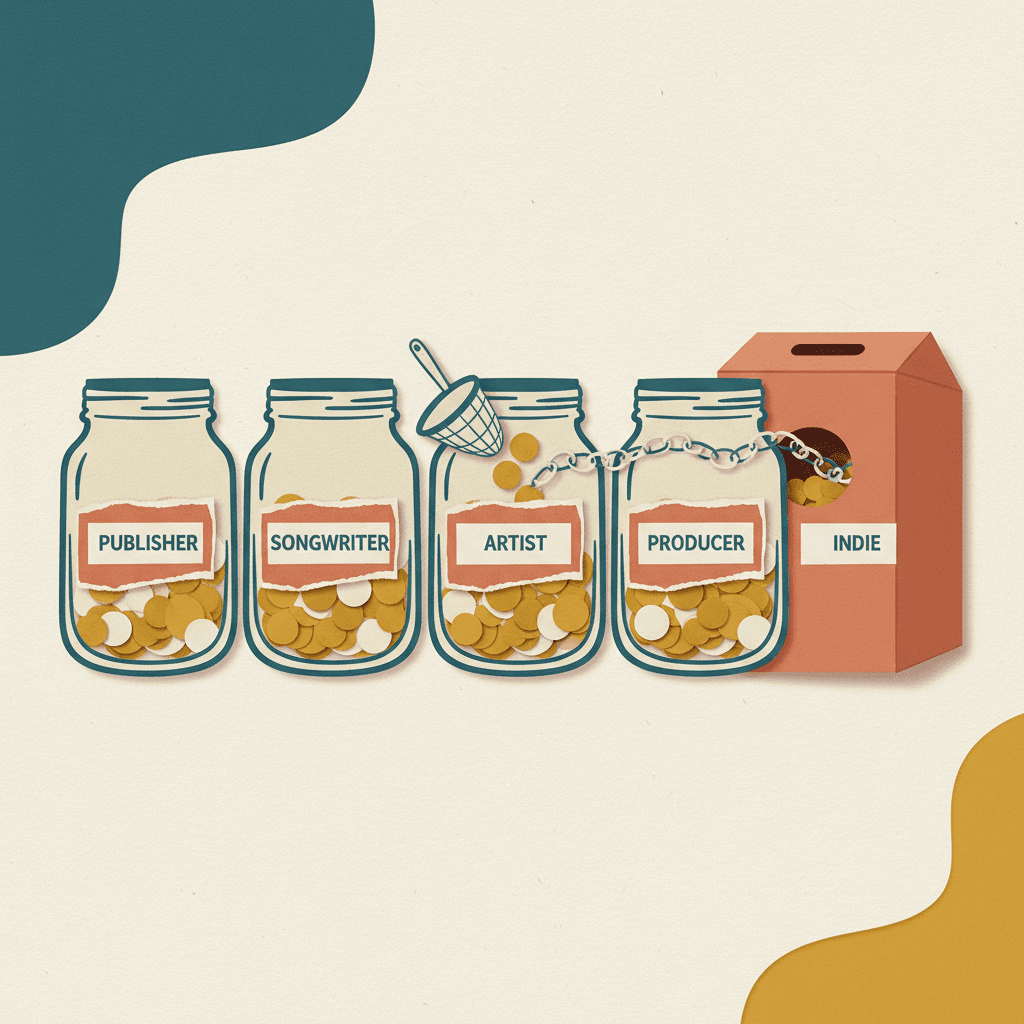
Streaming manipulation takes multiple forms. Bot farms generate fake plays. Click farms artificially inflate engagement metrics. Shell accounts cycle streams through fabricated playlists. The goal is always the same: siphon royalties from legitimate rights holders into fraudulent pockets.
Generative AI has accelerated the problem. Creating thousands of synthetic tracks now requires minimal effort. Uploading them through multiple distributor accounts is trivial. Coordinating bot networks to stream them is automated. Detection systems struggle to keep pace because fraudulent activity increasingly mimics legitimate user behavior.
The scale matters. If 5% of streams in a given royalty pool are fraudulent, legitimate rights holders lose 5% of their earnings. That percentage compounds across mechanical royalties, performance royalties, and neighboring rights. For an independent songwriter earning $10,000 annually from streaming, 5% fraud means $500 lost. At 10% fraud, you lose $1,000.
IMPALA represents over 5,000 independent labels across Europe. Their members report increasing difficulty distinguishing legitimate catalog growth from suspicious activity. Distributors flag accounts. Payment processors delay transfers. Legitimate songwriters get caught in fraud detection filters designed to stop bad actors.
What this means for independent songwriters
Unclaimed royalties
Your streams generate royalties. See how much is going unclaimed.
Streaming fraud creates three direct problems for you. First, it dilutes royalty pools. Every fraudulent stream paid out is money not available for legitimate plays. Second, it increases administrative friction. Platforms implement stricter verification requirements that delay payments and complicate onboarding. Third, it makes recovery harder. When UniteSync audits unclaimed royalties, we increasingly find legitimate earnings flagged or held because they match fraud patterns.
The coordination gap Smith highlights affects you immediately. Streaming platforms, distributors, collection societies, and publishers all operate separate fraud detection systems. These systems do not share data effectively. A fraudulent track blocked on Spotify may still collect royalties through YouTube Content ID. A shell publisher flagged by one CMO may operate freely in another territory.
This fragmentation means legitimate songwriters face multiple verification processes without corresponding protection. You prove your identity to your distributor, your PRO, your publisher, and your foreign societies separately. Meanwhile, fraudulent actors exploit the gaps between these systems.
The AI dimension makes this worse. Generative music tools can now produce tracks that sound professionally recorded. Metadata can be automatically varied to avoid duplicate detection. Distribution can be staggered across platforms and territories to stay under fraud thresholds. For independent songwriters competing for playlist placements and algorithmic recommendations, you are now competing against industrial-scale synthetic output designed to game the system.
How UniteSync fits in
UniteSync recovers unclaimed royalties from legitimate sources: the MLC, CMOs, PROs, foreign societies, and DSP black box funds. To date we have recovered over $547K for independent songwriters and small publishers. Our audits identify money you earned but never received because of administrative gaps, not fraud.
The fraud problem Smith describes makes our work more important and more difficult. More important because legitimate earnings increasingly get trapped in verification queues or flagged by overly broad fraud filters. More difficult because proving legitimacy now requires deeper documentation and longer resolution timelines.
We address this by maintaining direct relationships with collection societies and administrators. When your royalties are held for verification, we provide the documentation these organizations require. When fraud detection systems flag legitimate activity, we escalate through established channels. When unclaimed funds sit in black box pools because metadata does not match perfectly, we reconstruct the paper trail.
This is not anti-fraud work. We do not investigate suspicious activity or report bad actors. We recover money you legitimately earned that got stuck in the system. As fraud detection becomes more aggressive, more legitimate earnings get stuck. That gap is where we operate.
What coordinated action actually requires
Smith's call for coordination is correct but vague. Effective anti-fraud systems need three components. First, shared data infrastructure. Platforms and societies must exchange information about flagged accounts, suspicious metadata patterns, and verified bad actors. Second, standardized verification protocols. Independent songwriters should prove identity once, not separately to every organization. Third, transparent appeals processes. When legitimate activity gets flagged, resolution must be faster than the current 90-180 day timelines.
None of this exists today. Building it requires regulatory pressure, industry consensus, and significant technical investment. Until it exists, independent songwriters bear the cost through diluted royalty pools, delayed payments, and increased administrative burden.
Your action items are limited but concrete. Document everything. Keep master recordings, session files, and registration confirmations. Register works promptly with your PRO and the MLC. Use consistent metadata across all platforms. Monitor your royalty statements for unexplained drops or holds. When payments are delayed, ask specific questions about verification requirements.
Fraud will continue growing until the industry implements coordinated detection and enforcement. While you wait for that coordination, protect your earnings by maintaining clean documentation and working with administrators who can navigate verification processes on your behalf.
Reporting via Digital Music News.
If you are an independent songwriter or publisher, UniteSync can audit your catalog for unclaimed royalties across the MLC, PROs, CMOs, and foreign societies. Start with a free royalty audit to see what you may be missing.
AUTHOR
Carlos Palop
CEO & Co-founder, UniteSync
Carlos Palop is a seasoned music publishing expert, adept in rights management and royalty distribution, ensuring artists' works are protected and profitably managed. Their strategic expertise and commitment to fair practices have made them a trusted figure in the industry.