Ditto Music Distribution Review 2026: Pros & Cons for Independent Artists
This Ditto Music Distribution Review 2026: Pros & Cons starts with context. Ditto operates in a crowded field of music distribution platforms, competing with DistroKid's unlimited-release model, CD Baby's one-time fees, and AWAL's selective artist services. Independent artists evaluate distributors on three axes: cost structure, DSP distribution speed, and royalty transparency. This guide walks through Ditto's 2026 offering across all three, then assesses whether its feature set justifies the price for different artist profiles.
We cover account setup, pricing tiers, DSP delivery mechanics, royalty reporting accuracy, and tactical optimization. The goal is a decision framework, not marketing copy. If you release two singles per year, Ditto's subscription model costs more than CD Baby's per-release fee. If you release weekly, the math flips. The details matter.
What Ditto offers for music release distribution
Ditto distributes audio releases to Spotify, Apple Music, YouTube Music, Amazon Music, Tidal, Deezer, Pandora, TikTok, Instagram, and roughly 200 other DSPs. The platform handles singles, EPs, albums, and remix packages. Territory coverage is global, though some DSPs restrict availability by region regardless of distributor. Ditto does not curate; any artist can sign up and distribute immediately.
The core service is DSP distribution (Spotify, Apple Music, and the rest) plus ISRC assignment, UPC generation, and basic sales reporting. Ditto provides a web dashboard for uploading audio, entering metadata, and tracking streams. The platform assigns ISRCs automatically if you do not supply your own. Artwork must meet DSP specs: 3000x3000 pixels minimum, RGB color space, no logos or URLs in the image itself.
Ditto's feature set includes pre-save campaign tools, playlist pitching to Spotify's editorial team, and split payment functionality for collaborators. The split system lets you allocate percentages to co-writers or featured artists, and Ditto pays each party directly. This matters for workflows where multiple rights holders share a release.
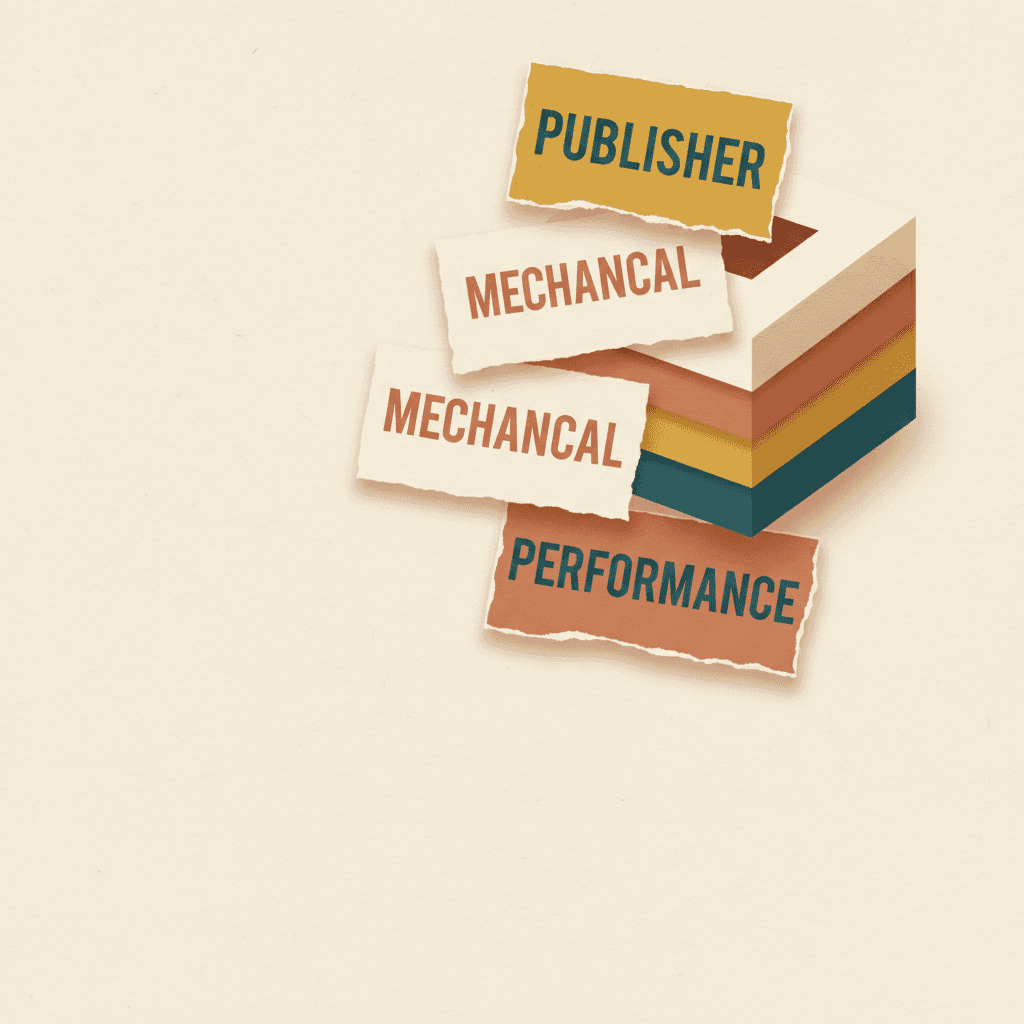
The platform does not offer publishing administration, so mechanical royalties from streams and downloads go to whoever controls the composition copyright separately. Ditto collects only the recording revenue that DSPs pay to the distributor. If you want mechanical collection, you need Songtrust, Sentric, or a traditional publisher alongside Ditto.
Artist distribution services from Ditto include YouTube Content ID, which monetizes user-generated videos using your audio. This runs through a partnership with a rights management provider. The Content ID feature costs extra on lower-tier plans and comes standard on higher tiers.
Setting up your account and first release
Account creation requires an email, artist name, and payment method. Ditto bills subscriptions monthly or annually depending on the plan you choose. Once the account is active, you upload audio files (WAV or FLAC, 16-bit 44.1kHz minimum), enter release metadata, and set a release date.
Metadata fields include track titles, artist names, genre tags, release date, copyright holder, and production credits. Ditto asks for primary artist, featured artists, composers, and producers. The composer field is critical if you plan to register the works with a PRO like ASCAP, BMI, or PRS for Music later. Accurate metadata at distribution prevents mismatched credits when performance royalties flow through CISAC's network.
ISRC assignment happens automatically during upload unless you provide your own codes. If you have ISRCs from a previous distributor or a direct ISRC registrant account, enter them manually to maintain continuity. Reusing ISRCs across distributors ensures that streaming data aggregates correctly in Spotify for Artists and Apple Music for Artists dashboards.
Delivery timelines vary by DSP. Ditto claims same-day delivery to some platforms, but Spotify and Apple Music distribution typically requires 3-5 business days for new releases to go live. TikTok and Instagram can take 7-10 days. If you schedule a release for a Friday, submit at least two weeks in advance to avoid delays.
Understanding Ditto's pricing structure
Ditto operates on annual subscription tiers. The entry plan costs approximately $19 per year for a single artist name and unlimited releases. The mid-tier plan runs around $36 per year and includes YouTube Content ID. The top tier costs roughly $79 per year and adds priority support, detailed analytics, and promotional tools.
Distribution pricing comparison matters because DistroKid charges $22.99 per year for unlimited releases with no Content ID, while CD Baby charges $9.95 per single with no recurring fee. If you release one single per year, CD Baby is cheaper. If you release six singles, Ditto's $19 annual fee beats CD Baby's per-release model. DistroKid sits between them on price but lacks Ditto's split payment feature.
Hidden fees include takedown costs if you want to remove a release from DSPs before switching distributors. Ditto charges a per-release removal fee, typically $10-15, which adds up if you have a large back catalog. Some competitors charge annual fees to keep releases live after you cancel your subscription. Ditto does not; your releases stay live as long as your subscription is active, but they come down when you cancel unless you pay the removal fee to transfer them elsewhere.
The music monetization model here is straightforward: Ditto takes no commission on royalties. You keep 100% of what DSPs pay. The subscription fee covers distribution infrastructure, not a revenue share. This differs from AWAL or Stem, which take 10-15% of earnings in exchange for no upfront cost.
Ditto Music Distribution Review 2026: Pros & Cons in detail
A data-driven assessment requires specifics. Ditto's strengths in 2026 include fast DSP delivery, a clean upload interface, and responsive customer support for paid tiers. Weaknesses include pricing increases over the past two years, removal of features from lower-tier plans, and occasional payout delays reported by artists in Q4 2025. Artist testimonials on Reddit and Twitter mention both smooth experiences and frustrating edge cases, particularly around metadata corrections after release.
Platform changes in 2026 include a redesigned analytics dashboard with per-territory breakdowns and a new playlist pitching tool that connects directly to Spotify's editorial submission form. Ditto also added DDEX integration for distributors that want to pull release data into external rights management systems.
Advantages of using Ditto
Unlimited releases on the $19 annual plan make Ditto competitive for high-output artists. If you release a single every two weeks, that is 26 releases per year at $0.73 per release. CD Baby would cost $258.70 for the same output. DistroKid matches Ditto's unlimited model but charges $22.99, and its interface is less intuitive for metadata entry.
Same-day distribution claims are accurate for some DSPs. TikTok and Instagram often go live within 24 hours of submission. Spotify and Apple Music take longer, but Ditto's delivery speed matches or beats competitors. Artists report releases going live on Spotify in 3-4 days when submitted two weeks ahead, compared to 5-7 days with some other platforms.
The analytics dashboard quality improved significantly in 2026. The platform now shows streams, downloads, and revenue per DSP, per territory, and per track. You can export data as CSV for external analysis. The dashboard updates daily, though DSPs report data on different schedules.
Limitations and common complaints
Pricing increases hit Ditto's user base in 2024 and 2025. The entry plan rose from $12 to $19 over 18 months. Existing subscribers were grandfathered for one renewal cycle, then moved to new pricing. This frustrated artists who budgeted for stable costs.
Feature removal history includes the elimination of free ISRC codes on the lowest tier in 2024. Artists now pay $1 per ISRC if they do not supply their own, or they upgrade to a higher plan. This change was not communicated clearly, and some artists discovered it only when uploading a release. Ditto reversed the policy after backlash, but the incident damaged trust.
Payout delays surfaced in Q4 2025 when several artists reported royalties arriving 30-45 days later than Ditto's stated schedule. The platform blamed DSP reporting lags, but competitors paid on time during the same period. Ditto resolved the delays by January 2026, but the issue raised questions about cash flow management.
Managing royalties and analytics through Ditto
Royalty reporting in Ditto aggregates data from DSPs and displays it in the dashboard under "Earnings." The platform shows total revenue, revenue per release, and revenue per DSP. You can filter by date range and export reports as CSV. Ditto updates earnings data as DSPs report it, which means Spotify streams from January appear in the dashboard by early February, while Apple Music data may lag until mid-February.
Payout schedules run monthly. Ditto pays royalties earned in a given month by the 15th of the following month, assuming you have met the $25 minimum threshold. If your balance is below $25, it rolls over to the next month. Payments go via PayPal or bank transfer depending on your region.
Dashboard breakdown by DSP and territory shows which platforms and regions generate the most revenue. If 60% of your streams come from Spotify in the US, the dashboard makes that visible. This data helps you target promotional efforts.
Accuracy compared to direct DSP data is generally high. Ditto's reported Spotify streams match Spotify for Artists within 1-2%, and Apple Music data aligns with Apple Music for Artists. Discrepancies occur when DSPs adjust historical data for fraud detection or refunds, but these are rare.
When Ditto makes sense for independent artists distribution options
Ditto fits artists who release frequently and want unlimited uploads without per-release fees. If you put out a single every month, Ditto's $19 annual plan costs $1.58 per release. CD Baby would cost $119.40 for the same output. DistroKid costs $22.99 annually but lacks Ditto's split payment feature, which matters for collaborative projects.
DistroKid makes more sense for artists who want the cheapest unlimited plan and do not need splits or Content ID. CD Baby fits artists who release infrequently and prefer one-time fees over subscriptions. If you release one album every two years, CD Baby's $29 album fee beats Ditto's $38 over two years.
Direct DSP deals through Spotify's direct upload tool or Apple Music's artist program eliminate distributor fees entirely, but they require separate uploads to each platform and do not provide ISRC assignment or UPC generation. Direct deals make sense for established artists with dedicated teams to handle multi-platform logistics. Independent artists benefit more from distributor features like automated metadata delivery and centralized royalty reporting.
Catalog size considerations matter because Ditto charges per artist name, not per release. If you have 50 back-catalog releases under one artist name, they all distribute under a single $19 subscription. If you have multiple artist projects, you need separate subscriptions or a higher-tier plan that supports multiple artist names.
Maximizing distribution experience and avoiding distributor misconceptions
Metadata optimization for discoverability starts with accurate genre tags. Ditto lets you select primary and secondary genres, and DSPs use these tags to surface your music in algorithmic playlists. If your track is electronic with hip-hop influences, tag it as "Electronic" primary and "Hip-Hop" secondary. Mismatched genres reduce playlist placement chances.
Pre-save campaign setup through Ditto's tools lets fans save your release to their library before it goes live. The platform generates a pre-save link that you share on social media. When the release drops, it automatically appears in fans' libraries, which boosts first-day streams and signals to Spotify's algorithm that the track has momentum. Set up pre-save campaigns at least two weeks before release to maximize sign-ups.
Using Ditto's promotional tools effectively means submitting to Spotify's editorial playlist team through the platform's pitching interface. Ditto connects directly to Spotify's submission form, so you do not need to log into Spotify for Artists separately. Pitch at least seven days before release, and include detailed descriptions of the track's sound, mood, and target audience.
Avoiding common distributor misconceptions includes understanding that no distributor guarantees playlist placement or streaming success. Ditto provides tools to pitch your music, but editorial decisions rest with DSP curators. Another misconception is that higher-tier plans increase your chances of playlist placement. They do not. Playlist placement depends on the music itself and how well you target your pitch.
Do not ignore the split payment feature if you collaborate with other artists. Setting up splits at distribution prevents disputes later when royalties arrive. Ditto pays each collaborator directly based on the percentages you set, which is cleaner than collecting all the money yourself and manually splitting it.
Final assessment
This Ditto Music Distribution Review 2026: Pros & Cons concludes that Ditto serves independent artists who release frequently, need unlimited distribution without per-release fees, and value features like split payments and Content ID. The platform's $19 entry tier is cost-effective at six or more releases per year. Artists who release less frequently should compare CD Baby's one-time fees.
Key decision factors include release frequency, catalog size, collaboration needs, and budget. Ditto's pricing increases and occasional platform bugs are real drawbacks, but the core service delivers DSP distribution reliably. The 2026 analytics improvements and DDEX integration make Ditto more competitive with higher-end platforms.
Next steps for artists evaluating their options: calculate your annual release count, compare total costs across Ditto, DistroKid, and CD Baby, and test Ditto's interface with a single release before committing to a full catalog migration.
AUTHOR

Carlos Palop
CEO & Co-founder, UniteSync
Carlos Palop is a seasoned music publishing expert, adept in rights management and royalty distribution, ensuring artists' works are protected and profitably managed. Their strategic expertise and commitment to fair practices have made them a trusted figure in the industry.